
The Hidden Opportunity in Healthcare: What Should We Stop Doing?
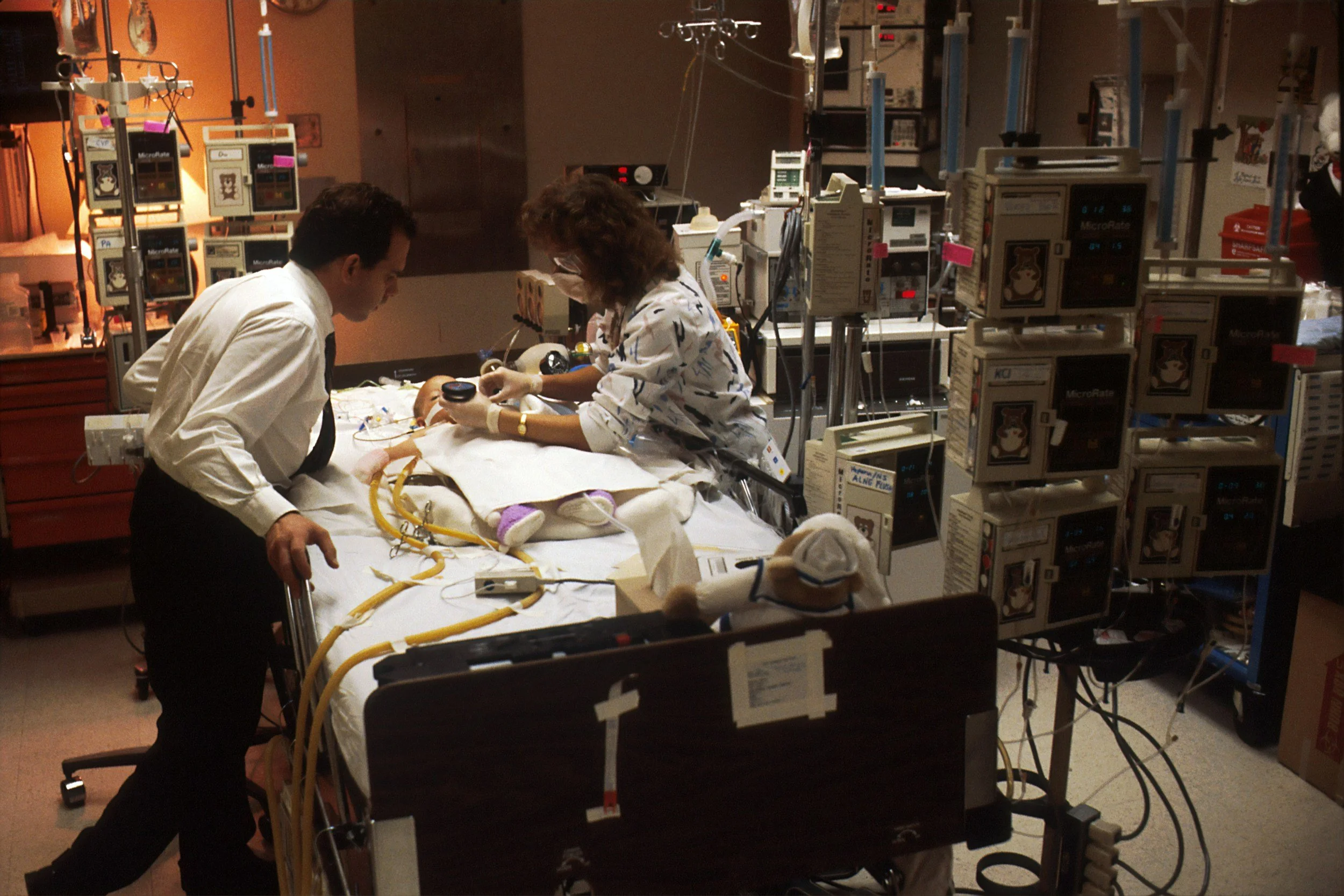
Healthcare organizations are remarkably good at adding new practices. A new guideline is published. A quality initiative is launched. A regulatory requirement emerges. An evidence-based intervention demonstrates improved outcomes.
We respond by asking: What should we start doing?
Far less often do we ask an equally important question: What should we stop doing?
Yet every day, nurses and clinicians spend valuable time performing practices—like those named above—because of tradition, habit, or historical precedent than because of current evidence. At D&H Nursing Innovations, we call this the hidden side of evidence-based practice (EBP).
EBP Isn't Just About Adoption
For decades, healthcare has focused on closing the gap between research and practice by accelerating adoption of evidence-based interventions. That work remains critical.
But there is another gap receiving far less attention: the gap between evidence and practices that should have been abandoned years ago. Many low-value practices continue despite strong evidence demonstrating limited effectiveness, potential harm, unnecessary workload, or wasted resources.
Examples of long-standing rituals, often passed from one generation of clinicians to the next, exist across every care setting.
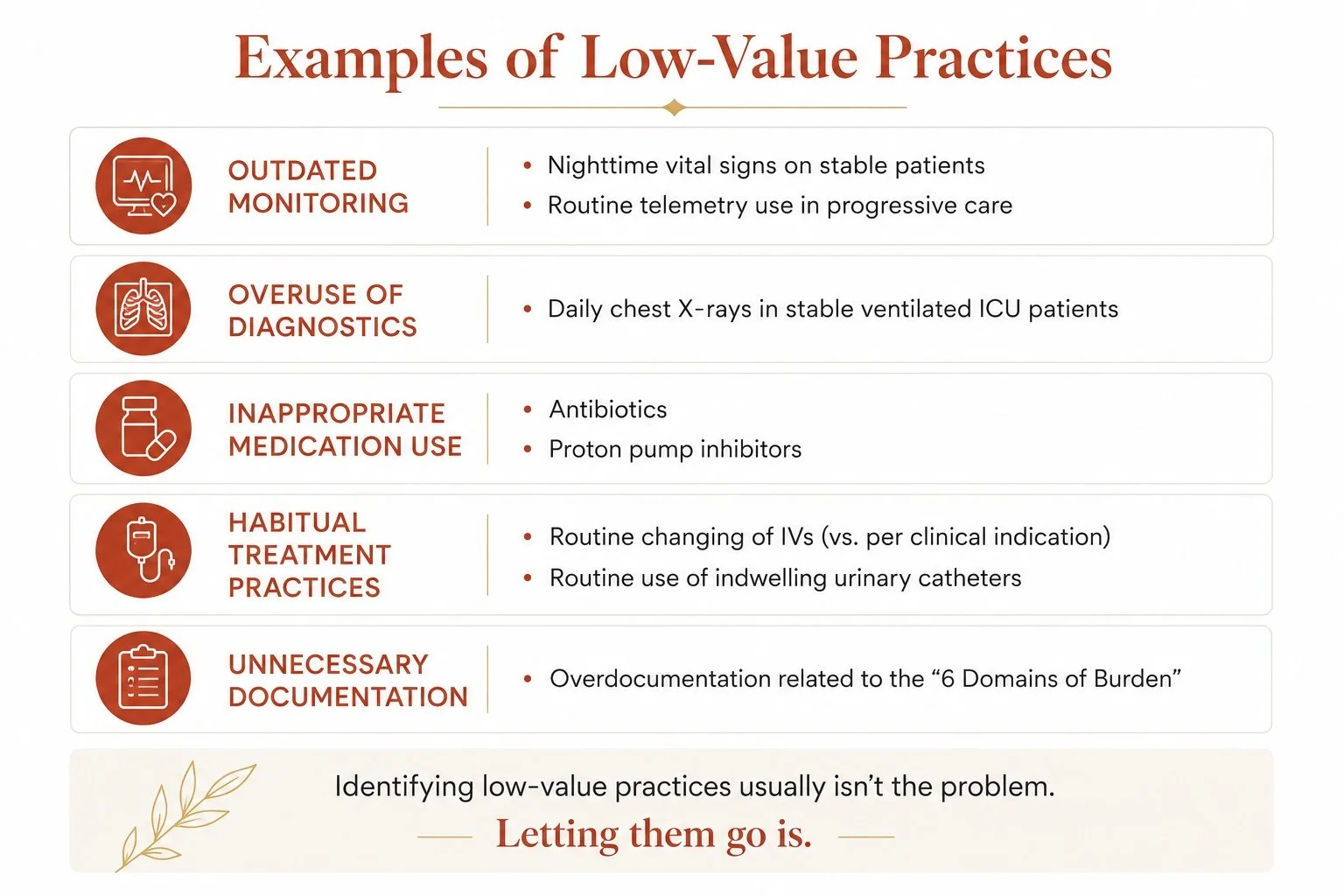
How many of these are still alive in your organization?
Why De-Implementation Is So Difficult
If evidence alone changed practice, healthcare would look very different. Most leaders have experienced the frustration of presenting compelling evidence only to encounter resistance from clinicians who are intelligent, experienced, and genuinely committed to patient care.
Why? Because clinical practice is built on habits.
Habits create efficiency. They help clinicians function in complex environments. But they also create powerful attachments to familiar ways of working. Research in behavioral science tells us that stopping a behavior is often harder than starting a new one.
Healthcare is no exception. Many low-value practices become embedded within organizational culture and professional identity. They become "the way we've always done it." When practices reach that level of cultural integration, evidence alone rarely changes behavior.
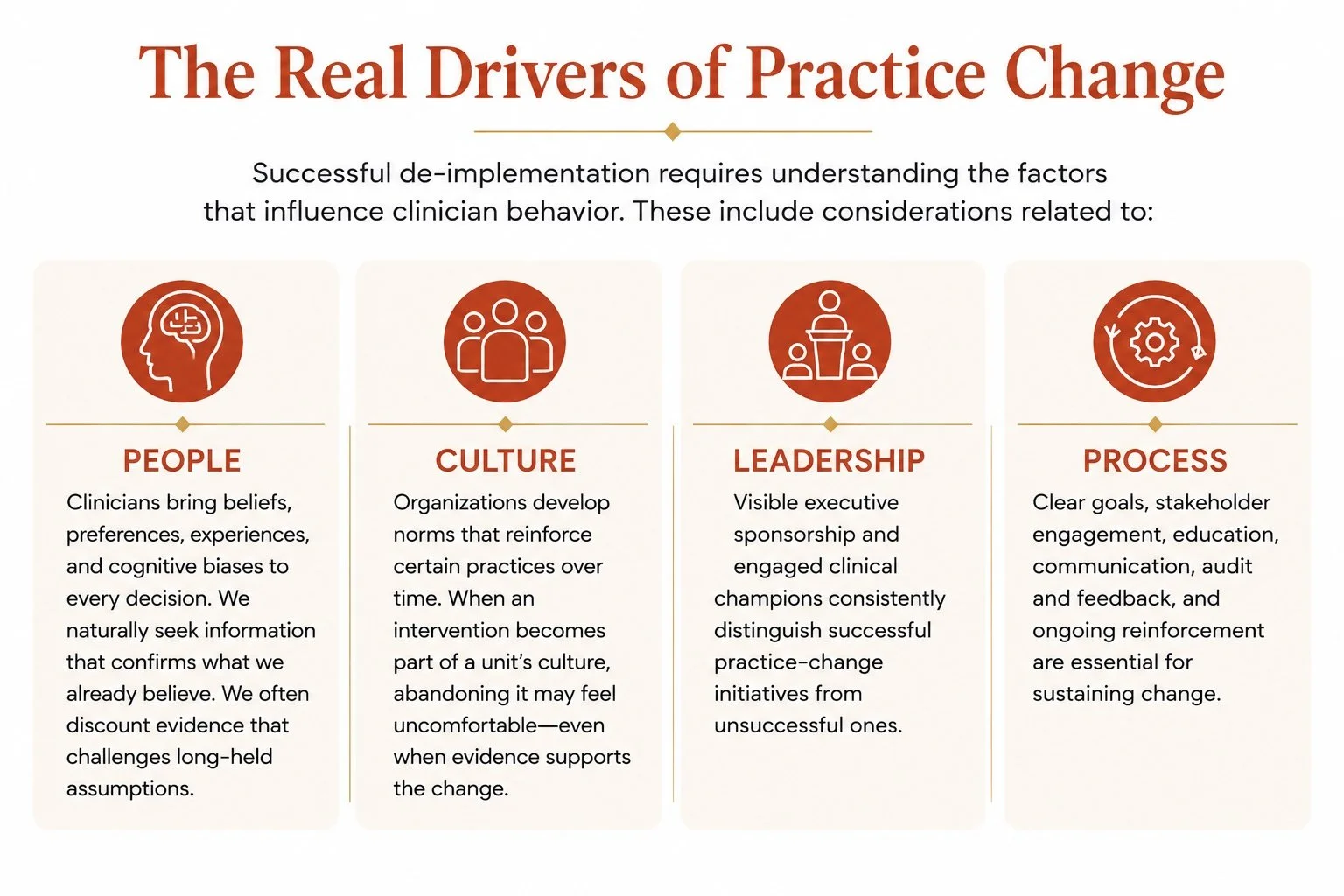
De-implementation is not merely an evidence problem.
It is a leadership, culture, and change-management challenge.
The Business Case for Letting Go
Healthcare leaders face unprecedented pressure to improve outcomes while controlling costs and reducing clinician burden. De-implementation directly supports these goals.
When organizations successfully eliminate low-value practices, they often achieve:
Improved patient safety
Reduced unnecessary variation
Increased clinician efficiency
Reduced workload burden
Better resource utilization
Stronger alignment with evidence-based care
Greater staff engagement
Perhaps most importantly, eliminating unnecessary work creates capacity for clinicians to focus on interventions that truly matter. In today's healthcare environment, that is not a luxury. It is a strategic necessity.
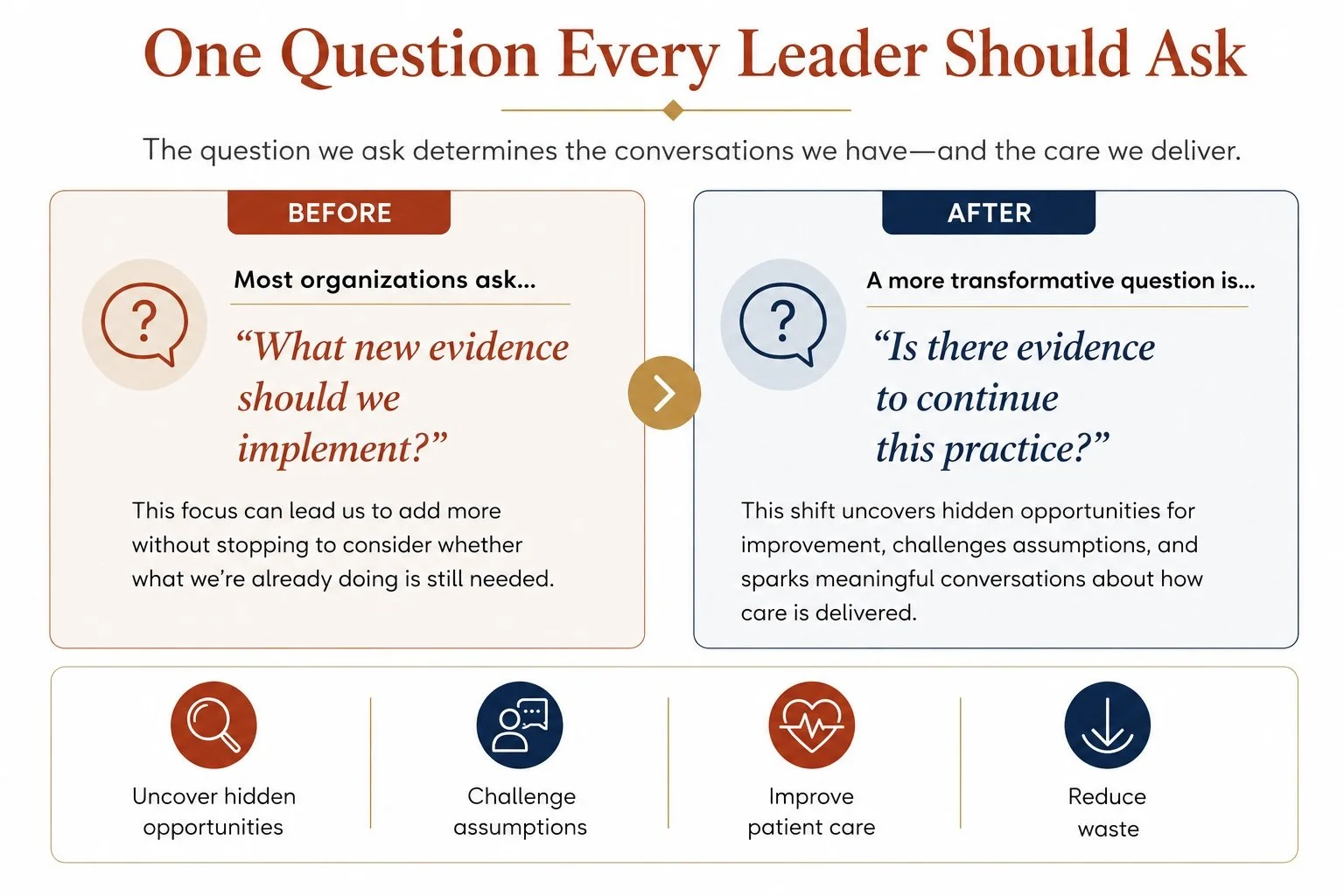
Great leadership begins with asking the right question. It shifts organizations from automatically preserving the status quo to intentionally evaluating whether current practices still deserve a place in modern healthcare.
How D&H Nursing Innovations Can Help
At D&H Nursing Innovations, we help healthcare organizations move beyond simply identifying low-value practices. We partner with leaders, advanced practice nurses, quality teams, and frontline staff to:
Build cultures of inquiry and evidence-based decision making
Identify opportunities for de-implementation
Evaluate the evidence supporting current practices
Assess organizational readiness and barriers
Engage stakeholders across disciplines
Develop implementation and de-implementation strategies
Measure outcomes and sustain change
Our approach combines EBP, implementation science, behavioral science, and practical leadership strategies to create lasting change. Because improving healthcare is not only about discovering what works. It is also about having the courage to stop doing what no longer does.
What practice in your organization deserves a closer look?
D&H Nursing Innovations helps healthcare organizations answer that question—and turn the answer into measurable results.
